
Stretch Cushion Covers vs. Zippered Covers: Which Is Better for Patio Furniture?

When you’re shopping for outdoor cushion covers, you’ll find two kinds. Stretch outdoor cushion covers pull on over the cushion you already own and conform to its shape. Zippered covers are built as an enclosure you slide the cushion into and close.
Which one suits you depends on fit, appearance, weather exposure, and what’s wrong with your cushions right now.
Key Takeaways
- A zipper is just a closure method, not a performance rating. Fabric is what decides whether a cover resists sun, water, and mildew.
- Poly-knit is 95% polyester and 5% spandex. The polyester handles durability and washing; the spandex supplies the recovery that keeps the cover pulled tight.
- Stretch covers aren’t inherently waterproof. A patio that takes sustained rain calls for waterproof canvas, which usually comes with a zipper.
- Elastic absorbs about a quarter inch of variance. Accurate measurements are crucial.
What’s the Difference Between Slip-On and Zippered Covers?
Slip-on cushion covers are made from knit fabric with elastic built into the weave. You stretch the cover over the cushion, let go, and the fabric pulls back against the contours. There’s no closure to fasten because the tension of the fabric is what holds everything in place.
With zippered covers, the cover is sewn to a fixed set of dimensions, the cushion goes inside, and a zipper closes the opening. The fit comes from the sewing pattern rather than from any give in the fabric.
One thing is commonly misread here. A zipper is a closure method, not a performance rating. It tells you nothing about whether a cover resists UV, sheds water, or holds up to mildew. Those all come down to the fabric.
Stretch vs. Zippered at a Glance
| Factor | Stretch Covers | Zippered Covers |
|---|---|---|
| Installation | Pull on over the cushion | Insert the cushion and zip |
| Fit flexibility | Conforms to the cushion it’s on | Depends on precise sewn dimensions |
| Appearance | Fitted, close to the cushion | Structured and squared off |
| Specialty shapes | Stretch absorbs minor variation | Needs construction built to the shape |
| Weather protection | Determined by fabric | Determined by fabric |
The bottom two rows are the ones that get overlooked. Weather protection is identical in the sense that it has nothing to do with the closure and everything to do with what the cover is made of. A zippered cover in a thin, untreated fabric protects a cushion less well than a knit cover built to resist fading and mildew.
How Poly-Knit Stretch Works
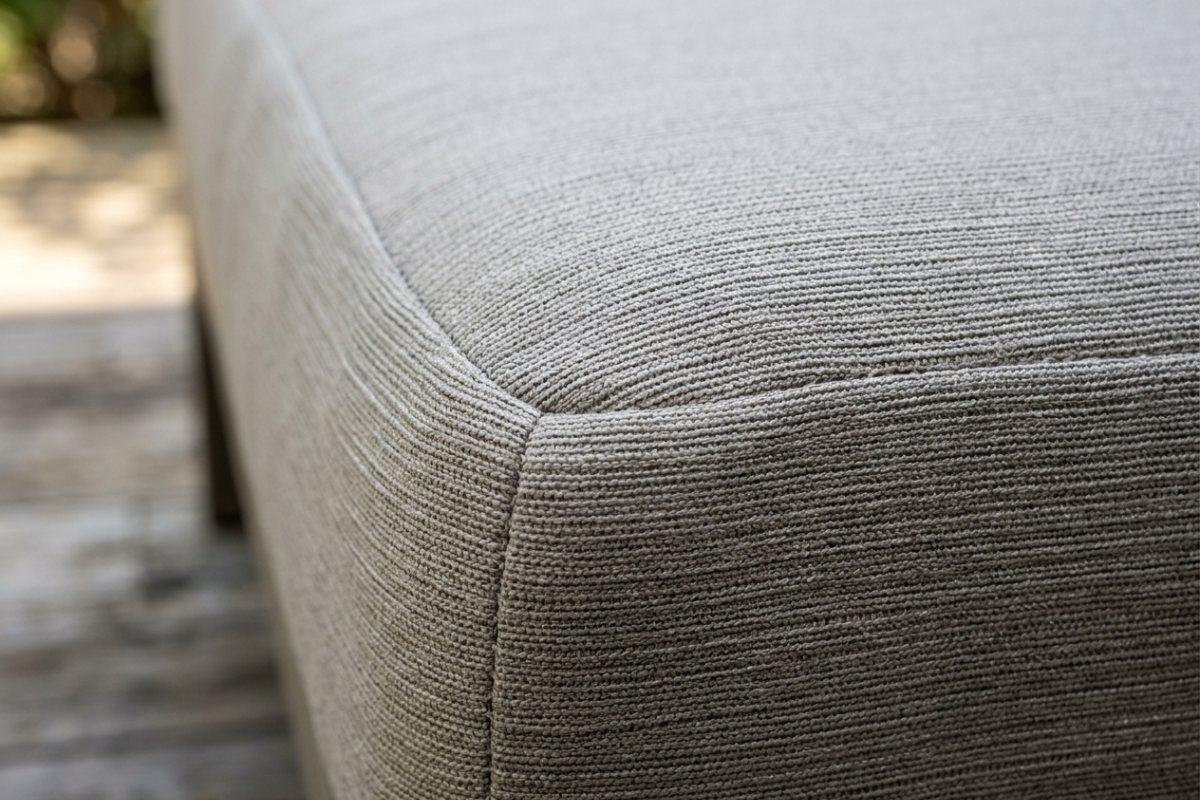
The stretch outdoor cushion covers we make use a poly-knit fabric that’s 95% polyester and 5% spandex. Each part does a specific job, and the ratio matters more than it looks.
Polyester gives the fabric its body, resists fading and staining, holds up against mildew, and survives a machine wash without losing shape. On its own, though, polyester knit would sag over a cushion.
Spandex supplies the recovery. 5% is enough to let the fabric stretch and snap back to where it started. That recovery is what separates a form-fitting cover from a saggy one. The cover isn’t just big enough to go over the cushion; it’s pulling inward against it the entire time, which is what keeps the corners tight and the surface smooth.
Elastic cushion covers for outdoor use need that recovery to survive a full season of sun, rain, and repeated washing. If you want the longest-lasting color, our premium solution-dyed acrylic line carries a 10-year fade warranty, with the color built into the fiber rather than applied to the surface.
What Stretch Covers Don’t Do
Two limits to know about in the slipcovers vs zippered covers conversation.
Stretch is not waterproofing. Our poly-knit resists fading, staining, and mildew, and it dries quickly, but it isn’t a rain barrier. If your patio is uncovered and takes weather all season, waterproof canvas is the fabric to go with, and that construction generally uses a zipper.
Stretch also doesn’t make up for a bad measurement. Elastic absorbs a quarter inch of variance, not two inches. A cover that’s too large stays loose no matter how much spandex is in it, and one ordered too small strains at the seams. The fabric helps at the margins and nowhere beyond that.
Matching the Cover to the Problem
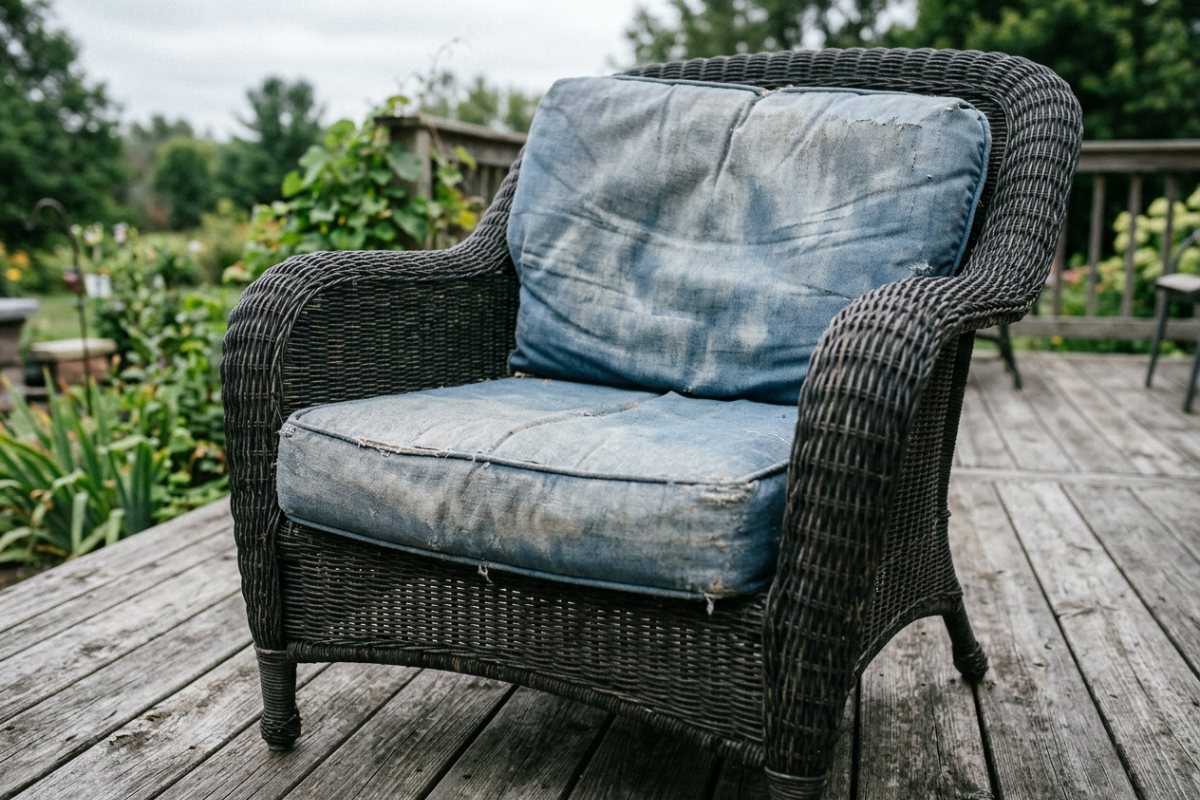
Rather than deciding which construction wins in the abstract, start from what’s wrong with your cushions.
| Patio Problem | What to Look For |
|---|---|
| Faded cushions | Any new cover restores the color; pick the fabric by sun exposure |
| Stained cushions | A washable cover you can pull off and launder |
| Mildew concerns | Mildew-resistant fabric that dries fast |
| Outdated look | Stretch covers, since swapping them takes a minute |
| Frequent rain | Waterproof canvas construction |
| Unusual cushion shapes | Custom-fit options rather than stock sizing |
| Cushions still structurally sound | Covers instead of full replacement |
Most patios present more than one of these at once. When they conflict, weather exposure usually decides it.
Getting the Fit Right
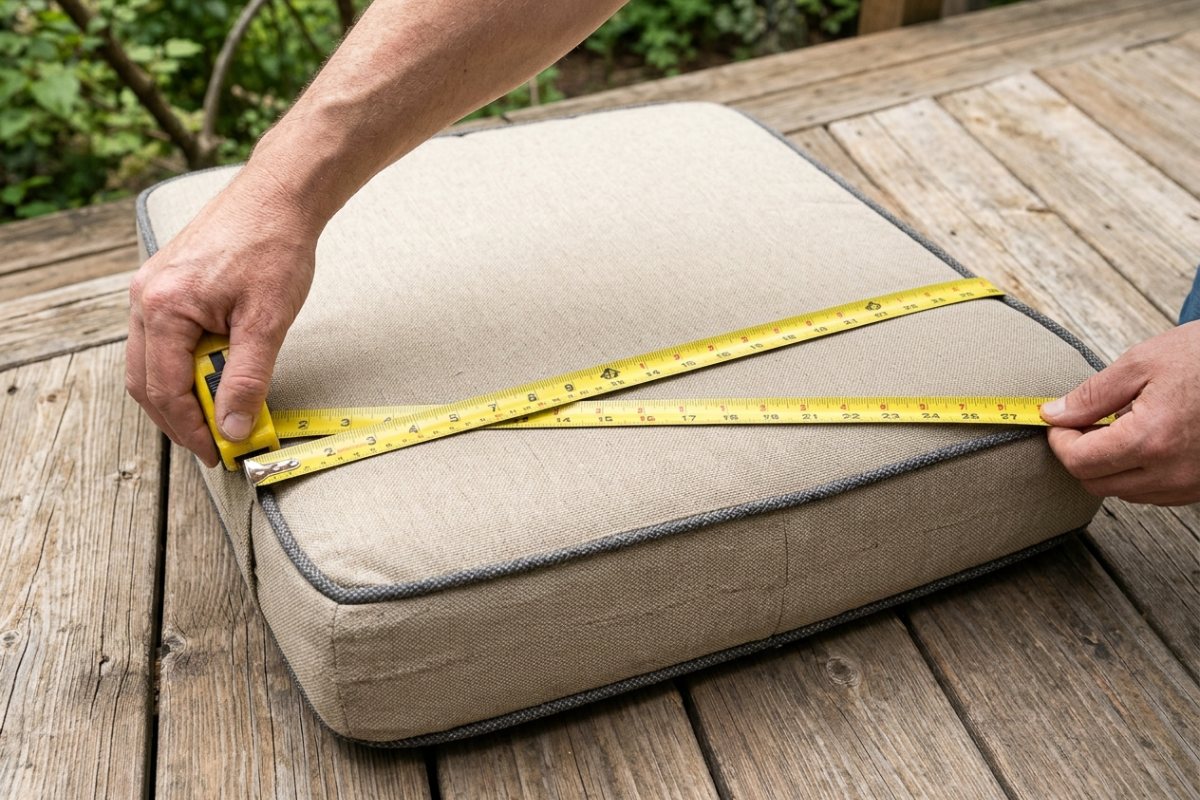
Three measurements cover most cushions: width, depth, and thickness. Width runs side to side across the face. Depth runs front to back. Thickness is the height of the cushion from top surface to bottom, measured at its fullest point, as opposed to wherever it’s been compressed.
Thickness is the one that gets overlooked and it changes the fit more than either of the others. A cover sized for a three-inch-thick cushion pulls badly over a five-inch one. Our size chart lists standard dimensions if you want to check yours against them.
Covers for cushions that have curved fronts, wedge shapes, or angled backs need more than three numbers. Photograph the cushion from directly above, note where the curves start and stop, and send that along with your measurements. We make custom outdoor cushion covers to whatever dimensions you give us, so an odd shape isn’t a problem as long as we can see it.
Conclusion
There’s no style of construction that wins every time. Zippered waterproof covers suit exposed patios where shedding rain is the first priority. Stretch outdoor cushion covers work well on patios that don’t get so much rain. Either one can save a cushion that still works. If your foam holds its shape and the only trouble is the fabric wrapped around it, replacing the whole cushion spends more money than you need to spend.
Measure your cushions, decide how much weather they take, then browse our outdoor furniture cushion covers to find the fabric that fits how you use your patio.
FAQs
Can stretch cushion covers be used on cushions that are already faded or stained?
Yes. That’s the most common reason people order them. The cover goes over the existing cushion and hides what’s underneath completely. The only thing to check first is whether the cushion is still structurally sound. If the foam holds its shape and doesn’t smell of mildew, a cover solves the appearance problem on its own.
Do stretch outdoor cushion covers work on curved or unusually shaped patio cushions?
Often, yes. The elastic in the fabric absorbs gentle curves and rounded corners that a rigidly sewn cover would fight. Pronounced shapes are a different matter. Wedge seats, T-shapes, and cushions with attached backrests need custom sizing rather than a stock cover. Send us photos and measurements and we’ll tell you what’s workable.
Will outdoor cushion covers protect cushions from rain, or do I need a waterproof cover?
It depends on the fabric, not the cover style. Poly-knit sheds light moisture and dries quickly, which handles dew and the occasional shower. It won’t keep a cushion dry through sustained rain. For a patio with no roof or awning, waterproof canvas with a polyurethane backing is the fabric built for that job.
How do you keep outdoor cushion covers from slipping or moving when people sit on them?
Fit does most of the work. A correctly sized stretch cover grips the cushion under tension, so there’s little for it to slide against. Our covers also have an elastic cord on the back that draws the fabric underneath and holds it there. Covers that shift around are almost always covers ordered a size too large.